
Why a Payment Agentic Data Plane
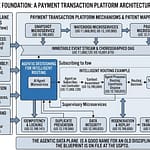
Agentic Data Plane in Payments
Agentic Data Plane in Payments
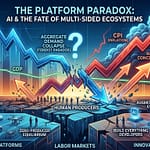
This post investigates the existential macroeconomic divergence facing the multi-sided platform model in the era of Generative Artificial Intelligence (GenAI). Historically, platforms have acted as “efficiency engines,” reducing transaction costs and subsidizing innovation for human producers. However, the emergence of AI as a primary agent of production forces a structural reckoning that plays out differently across the two dominant…

We have collectively lost our minds. Across boardrooms in Frankfurt, Singapore, and New York, banking executives are signing off on cloud migration budgets in the hundreds of millions. The pitch is compelling: elastic compute, managed services, pay-as-you-go pricing. The promise is that all of this will solve deep, structural problems in how banks build and run technology. It won’t….
Explainability as an Architectural First-Class Concern Introduction We stand at a peculiar inflection point in financial history. The algorithms making credit decisions, fraud determinations, and trading executions increasingly operate beyond the comprehension of those who deploy them. This is not a failure of engineering. It is a failure of architectural philosophy, particularly in the context of AI explainability. The…
For decades, the strategic ideal guiding businesses was the pursuit of a sustainable competitive advantage. Corporate leaders invested heavily in creating unique positions that could be defended for decades. Conceptually elegant, this approach envisioned building durable moats—whether technological, brand-based, or operational—to fend off competitors and secure consistent profits and market dominance. The narrative was straightforward: find your distinctive niche,…
In an era marked by unprecedented volatility and regulatory scrutiny, the banking sector stands at a critical inflection point. The relentless march of digital transformation runs headlong into the immovable wall of systemic risk and compliance demands. This imposes a stark mandate: architecture must not only support innovation but, above all, safeguard stability. The steady hand of enterprise architecture—rooted…
The business landscape has been fundamentally reshaped. For decades, the dominant model was the pipeline: businesses created value by controlling a linear series of activities, from sourcing raw materials to delivering a finished product to the customer. Think of traditional manufacturing, publishing, or retail. But a new, more powerful model has emerged – the platform. As detailed in the…
The concept of vertical integration has evolved far beyond traditional manufacturing and supply chain control. Today’s most successful companies are leveraging vertical integration as a strategic foundation for innovation platforms—comprehensive ecosystems that control multiple layers of the value chain to accelerate product development, enhance customer experiences, and create sustainable competitive moats. What Is Vertical Integration as an Innovation Platform?…

There is an unspoken rule in the modern enterprise:…
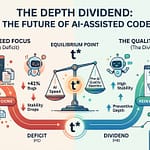
Engineering teams are making a massive miscalculation with AI….