AI Augmentation Analysis – IT Jobs

AI Augmentation Analysis 8211 IT Jobs

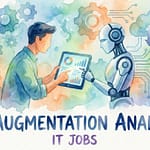
O*NET 27.3 · AI Augmentation Analysis · 5 Roles Where Does Each Role Go From Here? A trajectory analysis of five technology roles in the age of AI augmentation — examining merge potential, directional evolution, and obsolescence risk. Avg. Hours Saved / Wk 22.9 Across all 5 roles Avg. Agentic Replace Risk 21.2% Weighted ARL score Highest Risk Role…

READ MORE

Manual Coding is a Liability in the Agentic Enterprise

94A8B168 EE31 4EE6 85DE 8217FFB2492C

The shift from human-led coding to agentic design patterns first development represents more than a change in tools; it is a fundamental re-architecting of the software supply chain. In this new paradigm, manual coding is no longer a “craft”, it is a pipeline contamination. However, as we move toward a closed-loop system where AI agents build and humans act…

READ MORE

Pit Stops and Production Deployments

Grid to Git: What F1 Pit Stops Can Teach Us About Software Deployment In the world of Formula One, a race can be won or lost in the pits. A crew of 20 people works in a synchronized ballet to change four tires in under two seconds. As I watched my teams deploy code this week, I couldn’t help…

READ MORE

Beyond the Pipeline: Mastering Platform Strategy and the Hybrid Future

The business landscape has been fundamentally reshaped. For decades, the dominant model was the pipeline: businesses created value by controlling a linear series of activities, from sourcing raw materials to delivering a finished product to the customer. Think of traditional manufacturing, publishing, or retail. But a new, more powerful model has emerged – the platform. As detailed in the…

READ MORE

The Challenge: The Siren Song of Synchronous Business Rules at the Entry Point

The pressure to implement configuration-driven business rules at the entry point API stems from several factors: However, giving in to this pressure can quickly erode the benefits of adopting a platform approach. Revisiting the Platform’s Ideal: Entry Point vs. Downstream Processing The power of the platform, particularly for something like a payment hub dealing with external ecosystems, comes from…

READ MORE

Five Technical Patterns

Here are five technical patterns commonly used in software architecture and system design: 1. Microservices Architecture 2. Event-Driven Architecture 3. CQRS (Command Query Responsibility Segregation) 4. Saga Pattern 5. Domain-Driven Design (DDD)

READ MORE

Breaking Free from Analysis Paralysis: The Power of Occam’s Razor

In a world saturated with information and choices, the phenomenon of analysis paralysis is more prevalent than ever. Whether it’s deciding which product to buy, which career path to pursue, or even what to have for dinner, the overwhelming number of options can lead to indecision and stress. This is where the principle of Occam’s Razor comes into play—a…

READ MORE

DAG Based Microservice Architecture

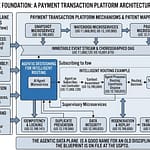
Background: As enterprises scale and evolve, their need for seamless, efficient, and resilient system architectures grows exponentially. Enter the DAG-Based Microservice Architecture — a modern paradigm that lays a Directed Acyclic Graph (DAG) over a streaming bus to power an event-driven, reactive, distributed, and proof-of-trust microservice ecosystem. Enhanced Logical Flow with DAGs At the heart of this architecture is…

READ MORE

Microservices: Understanding Choreography and Orchestration

Imagine microservices as a sports team. Just like in sports, each player (or service) has a specialized role but needs to work together to achieve a common goal, to score and ultimately win. In microservices, there are two primary ways these players, who are synonymous with a microservice.  Choreography and Orchestration Choreography: Soccer Team Approach In soccer game (futbol…

READ MORE