AI Eating Software: When Building Tools Becomes Easy, Does Value Vanish?
“A fool with a tool is still a fool.” — Grady Booch
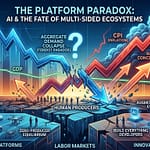
This post investigates the existential macroeconomic divergence facing the multi-sided platform model in the era of Generative Artificial Intelligence (GenAI). Historically, platforms have acted as “efficiency engines,” reducing transaction costs and subsidizing innovation for human producers. However, the emergence of AI as a primary agent of production forces a structural reckoning that plays out differently across the two dominant…
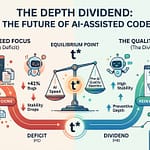
There is a quiet tragedy unfolding in the modern boardroom. It is the belief that if we use Artificial Intelligence to make our existing processes move faster, we are winning the race. As a leader, it is easy to celebrate the “quick wins.” We see developers building agents that automatically triage Jira tickets. We see architects using LLMs to…
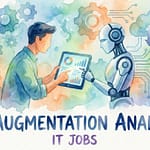
O*NET 27.3 · AI Augmentation Analysis · 5 Roles Where Does Each Role Go From Here? A trajectory analysis of five technology roles in the age of AI augmentation — examining merge potential, directional evolution, and obsolescence risk. Avg. Hours Saved / Wk 22.9 Across all 5 roles Avg. Agentic Replace Risk 21.2% Weighted ARL score Highest Risk Role…
Or did it? Just as video never quite buried radio, AI may be engineering a rebirth — not an obituary — for the developers bold enough to adapt. The Panic In 1979, the Buggles declared it with synthesized certainty: Video killed the radio star. The song wasn’t just a pop hook, it was a eulogy for an entire class…
The traditional role of Enterprise Architecture (EA) is on the brink of a revolution, driven by the rapid evolution of AI and, more specifically, Agentic AI. For years, EA has been the static blueprint, the methodical framework (think TOGAF and the Zachman Framework) for aligning an organization’s business strategy with its IT landscape. What happens when the very systems…
~ The technological landscape is evolving at a breakneck pace. Artificial intelligence (AI) and Cloud-Native application development are no longer emerging trends; they are foundational pillars of modern digital transformation. In this era of rapid innovation, some might question the continued relevance of traditional enterprise architecture (as exemplified by frameworks like TOGAF). Is it an outdated relic, a bureaucratic…
The concept of vertical integration has evolved far beyond traditional manufacturing and supply chain control. Today’s most successful companies are leveraging vertical integration as a strategic foundation for innovation platforms—comprehensive ecosystems that control multiple layers of the value chain to accelerate product development, enhance customer experiences, and create sustainable competitive moats. What Is Vertical Integration as an Innovation Platform?…
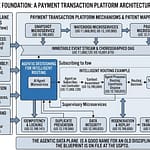
In today’s rapidly evolving business landscape, organizations are constantly seeking more efficient ways to structure themselves. The traditional matrix organization—with its functional silos and project-based overlays—is increasingly showing its limitations as the pace of innovation accelerates and technologies like AI, real-time data, and platform architectures go mainstream. This is especially true in complex, infrastructure-heavy spaces like payments and finance….
(Spoiler: You Probably Shouldn’t) For decades, the role of the Solution Architect has been revered as the pinnacle of technical achievement, an elite position for those who’ve spent years refining their coding skills, understanding complex systems, and designing elegant solutions. Architects have traditionally been the visionary leaders who shape the future of software, bridging the gap between business strategy…