
Why a Payment Agentic Data Plane
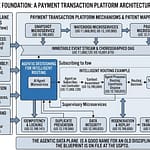
Agentic Data Plane in Payments
Agentic Data Plane in Payments

Fig.1 The Documentation Graveyard Every mid-senior developer has lived this story. You join a new team, crack open the API docs, and discover they describe an endpoint that was refactored six sprints ago. The response schema references fields that no longer exist. The authentication section still describes a bearer token flow that was replaced with OAuth2 last quarter. Nobody…

The shift from human-led coding to agentic design patterns first development represents more than a change in tools; it is a fundamental re-architecting of the software supply chain. In this new paradigm, manual coding is no longer a “craft”, it is a pipeline contamination. However, as we move toward a closed-loop system where AI agents build and humans act…

We have collectively lost our minds. Across boardrooms in Frankfurt, Singapore, and New York, banking executives are signing off on cloud migration budgets in the hundreds of millions. The pitch is compelling: elastic compute, managed services, pay-as-you-go pricing. The promise is that all of this will solve deep, structural problems in how banks build and run technology. It won’t….
Explainability as an Architectural First-Class Concern Introduction We stand at a peculiar inflection point in financial history. The algorithms making credit decisions, fraud determinations, and trading executions increasingly operate beyond the comprehension of those who deploy them. This is not a failure of engineering. It is a failure of architectural philosophy, particularly in the context of AI explainability. The…
In an era marked by unprecedented volatility and regulatory scrutiny, the banking sector stands at a critical inflection point. The relentless march of digital transformation runs headlong into the immovable wall of systemic risk and compliance demands. This imposes a stark mandate: architecture must not only support innovation but, above all, safeguard stability. The steady hand of enterprise architecture—rooted…
In today’s rapidly evolving business landscape, organizations are constantly seeking more efficient ways to structure themselves. The traditional matrix organization—with its functional silos and project-based overlays—is increasingly showing its limitations as the pace of innovation accelerates and technologies like AI, real-time data, and platform architectures go mainstream. This is especially true in complex, infrastructure-heavy spaces like payments and finance….
Background: As enterprises scale and evolve, their need for seamless, efficient, and resilient system architectures grows exponentially. Enter the DAG-Based Microservice Architecture — a modern paradigm that lays a Directed Acyclic Graph (DAG) over a streaming bus to power an event-driven, reactive, distributed, and proof-of-trust microservice ecosystem. Enhanced Logical Flow with DAGs At the heart of this architecture is…
Imagine microservices as a sports team. Just like in sports, each player (or service) has a specialized role but needs to work together to achieve a common goal, to score and ultimately win. In microservices, there are two primary ways these players, who are synonymous with a microservice. Choreography and Orchestration Choreography: Soccer Team Approach In soccer game (futbol…
Orchestration vs. Choreography: Choosing the Right Dance for Your System In the world of software architecture, particularly with the rise of microservices, how individual services interact is a critical design decision. Two dominant patterns for managing these interactions are Orchestration and Choreography. While both aim to achieve a cohesive workflow, they do so in fundamentally different ways. Understanding these…

There is an unspoken rule in the modern enterprise:…
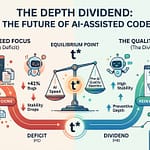
Engineering teams are making a massive miscalculation with AI….